Related Articles
- The Unexpected Impact of Environmental Factors on the Accuracy of Medication Dispensing Technologies
- Exploring the Influence of Mental Health Stigma on Accessibility and Affordability of Coverage in Modern Insurance Plans
- How Cloud Storage Quirks Are Quietly Complicating Patient Data Protection in Modern Healthcare Settings
- Top 6 Emerging Medical Billing Platforms Revolutionizing Practice Revenue Cycles Since 2019
- When Digital Distance Deepens Divide: Surprising Social Costs of Remote Health Services in Underserved Communities
- The Unexpected Role of EHR Usability in Physician Burnout and Strategies to Reclaim Workflow Balance
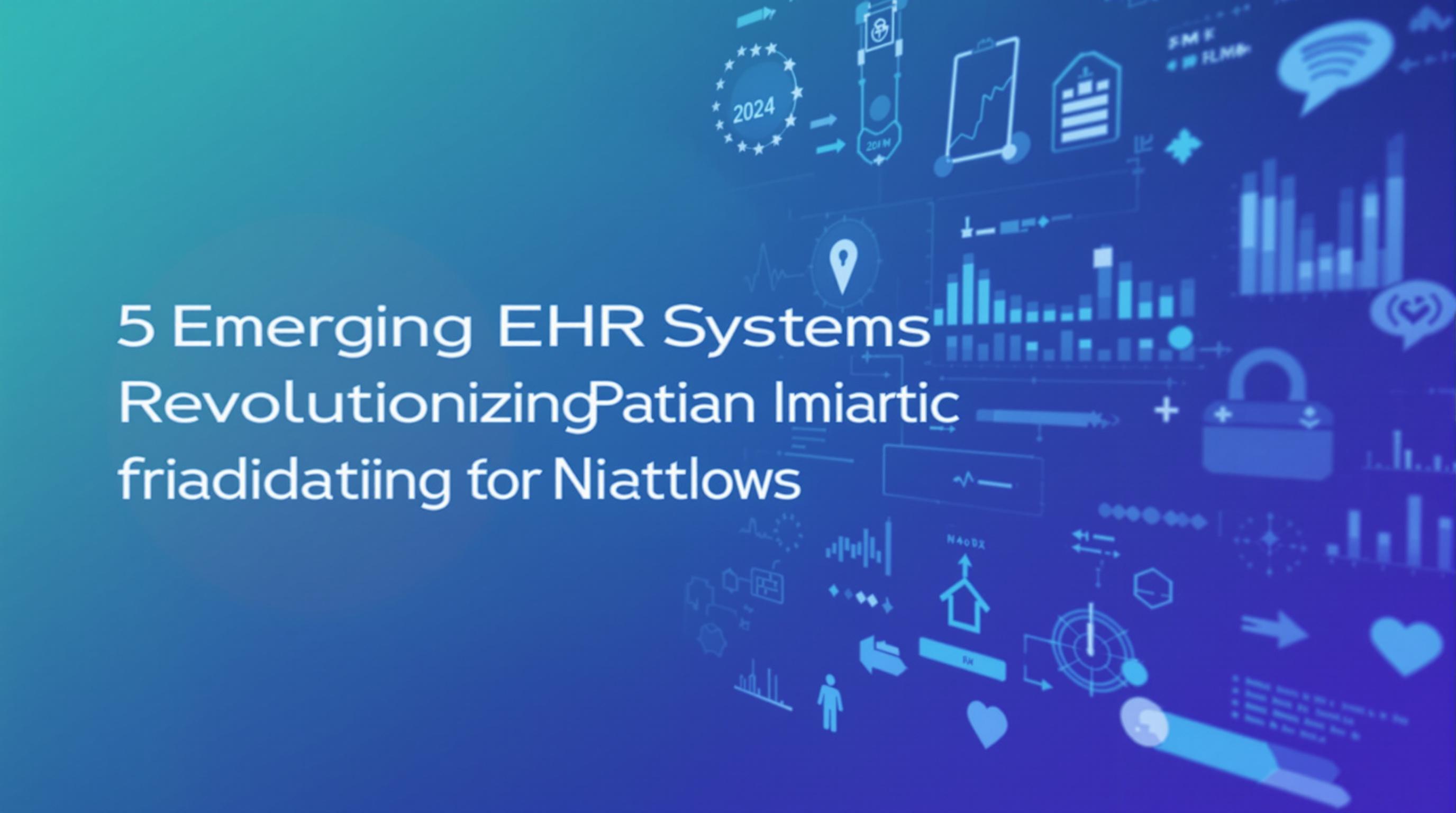
5 Emerging EHR Systems Revolutionizing Patient Data Security and Provider Workflows in 2024
5 Emerging EHR Systems Revolutionizing Patient Data Security and Provider Workflows in 2024
5 Emerging EHR Systems Revolutionizing Patient Data Security and Provider Workflows in 2024
Introduction
In the rapidly evolving landscape of healthcare technology, Electronic Health Record (EHR) systems play a pivotal role in safeguarding patient data and streamlining provider workflows. The year 2024 has marked the rise of innovative EHR platforms that promise enhanced security measures alongside improvements in clinical efficiency. This article explores five emerging EHR systems positioned to transform healthcare delivery by addressing critical challenges faced by providers and patients alike.
The need for robust patient data security has never been greater, as cyber threats continue to target healthcare infrastructures globally. Simultaneously, clinicians require systems that reduce administrative burdens and facilitate seamless communication across care teams. The following EHR solutions uniquely balance these demands through advanced technologies like blockchain, artificial intelligence (AI), and cloud computing.
By examining these systems, healthcare organizations can better understand how embracing cutting-edge EHRs can lead to improved patient outcomes, enhanced regulatory compliance, and optimized clinical workflows. The subsequent sections detail each platform's core innovations and potential impact on the healthcare ecosystem.
1. ClearMedSecure
ClearMedSecure leverages blockchain technology to create an immutable and transparent patient record ledger that significantly enhances data security. By decentralizing patient information storage, ClearMedSecure ensures that no single point of failure can expose sensitive data, thereby mitigating risks of breaches and unauthorized access.
This system employs smart contracts to automate patient consent management, allowing providers to access records only with explicit approval. This feature strengthens patient autonomy and aligns with evolving data privacy regulations such as HIPAA and GDPR.
Beyond security, ClearMedSecure integrates AI-driven workflow optimization tools that help clinicians prioritize tasks, schedule follow-ups, and reduce redundant data entry. Early user feedback suggests improved provider satisfaction and reduced administrative overhead, highlighting its promise in transforming everyday clinical operations.
2. MediFlow AI
MediFlow AI combines advanced machine learning algorithms with real-time data analytics to improve both data security and provider workflow efficiency. Its predictive algorithms detect anomalies in access patterns, flagging potential insider threats or cyberattacks before they escalate.
On the provider side, MediFlow AI offers automated documentation assistance, extracting relevant clinical data from voice commands and handwritten notes. This reduces documentation time, enabling clinicians to focus more on direct patient care.
Additionally, the system's interoperability framework allows seamless integration with existing hospital information systems, enhancing data sharing while maintaining stringent encryption standards. This balance of innovation and compatibility positions MediFlow AI as a leading EHR solution in 2024.
3. AuraHealth Cloud
AuraHealth Cloud represents the next generation of cloud-based EHRs, emphasizing both scalability and security. Its multi-layered encryption protocols protect patient data during transmission and storage, adhering to the highest global security certifications.
What sets AuraHealth Cloud apart is its adaptive access control system, which adjusts provider permissions dynamically based on context, such as location and device used. This contextual security model reduces the risk of unauthorized data exposure in complex healthcare environments.
Furthermore, AuraHealth Cloud incorporates collaborative workflow tools that facilitate multidisciplinary care coordination. By simplifying communication among providers, it fosters holistic patient management and reduces delays in treatment decisions.
4. NexusCare EHR
NexusCare EHR introduces a patient-centric design philosophy that empowers individuals with direct access to and control over their medical records. Patients can grant or revoke provider access instantly via a user-friendly interface, enhancing transparency and trust.
From a security standpoint, NexusCare employs biometric authentication for both patients and providers, adding a robust layer of identity verification. This reduces the likelihood of credential compromise and fraudulent record access.
In terms of workflow, NexusCare streamlines appointment scheduling, prescription management, and billing processes within a unified platform. Early adopters report increased operational efficiency and patient engagement, indicating its potential to reshape care delivery.
5. VitalSync Platform
VitalSync Platform harnesses edge computing to decentralize data processing closer to point-of-care devices, enhancing responsiveness and reducing latency. This capability is particularly beneficial in emergency settings where timely access to accurate records is critical.
The platform integrates continuous monitoring of data integrity and automated backup protocols, safeguarding against data loss even in network disruptions. Its security architecture complies with strict healthcare data standards, providing peace of mind to providers and patients.
VitalSync also features a customizable dashboard that consolidates patient metrics, alerts, and clinical notes, enabling personalized workflows tailored to different specialties. This customization supports diverse clinical environments from primary care to specialized treatment centers.
Improving Patient Data Security with Advanced Technologies
Emerging EHR systems are at the forefront of incorporating advanced security technologies such as blockchain, AI, and biometric authentication. These innovations address critical vulnerabilities that have historically challenged healthcare IT infrastructure.
By decentralizing data storage and automating access controls, the risk of large-scale data breaches is diminished. Moreover, intelligent threat detection systems proactively mitigate cyber risks before damage occurs, representing a paradigm shift in patient data protection.
Providers can trust these technologies to maintain compliance with regulatory mandates while safeguarding patient privacy. Patients benefit from greater transparency and control over their personal health information, fostering a more secure healthcare relationship.
Streamlining Provider Workflows for Enhanced Care Delivery
Modern EHR platforms emphasize usability and workflow integration to minimize clinician burnout caused by administrative tasks. Features like AI-driven documentation assistance and real-time analytics support faster decision-making and reduce errors.
Interoperability remains a key priority, enabling seamless data exchange across disparate systems. This interoperability not only improves care coordination but also boosts operational efficiency within healthcare organizations.
By offering customizable dashboards and automated scheduling tools, emerging EHRs meet the diverse needs of various specialties, ensuring that providers remain focused on patient-centered care rather than cumbersome data management.
Looking Ahead: The Future of EHR in Healthcare
As technology continues to evolve, the future of EHR systems lies in greater artificial intelligence integration and patient empowerment. Predictive analytics will increasingly guide proactive care, while enhanced patient portals will foster collaborative health management.
Security innovations will also advance with adaptive authentication strategies and quantum-resistant encryption methods becoming standard to combat sophisticated cyber threats. Such progress is critical to maintaining trust in digital health infrastructures.
Healthcare organizations that adopt forward-thinking EHR platforms now will position themselves to leverage these advancements fully, ultimately delivering more secure, efficient, and patient-focused care in the years to come.
Conclusion
The five emerging EHR systems highlighted in this article—ClearMedSecure, MediFlow AI, AuraHealth Cloud, NexusCare EHR, and VitalSync Platform—demonstrate the dynamic innovations revolutionizing patient data security and provider workflows in 2024. Their integration of blockchain, AI, cloud computing, and biometric technologies sets new standards in healthcare IT.
Adopting these platforms can not only fortify defenses against growing cyber threats but also enhance clinical efficiency and patient engagement. As healthcare continues its digital transformation, these pioneering EHR systems will be instrumental in shaping a secure, effective, and compassionate care environment.
For organizations seeking to improve both security and workflow, embracing these technologies represents a critical step forward toward delivering holistic, future-ready healthcare.
Sources
1. Healthcare IT News: "Blockchain in Healthcare: Securing Patient Data" (2024)
2. Journal of Medical Internet Research: "AI Applications in EHR Documentation" (2024)
3. HIPAA Journal: "Emerging Trends in Healthcare Data Security" (2024)
4. HIMSS: "Interoperability Challenges and Advances in 2024" (2024)
5. National Institute of Standards and Technology (NIST) Reports on Healthcare IT Security (2024)
Read More